Team eatamame

A healthy dinner for weight loss doesn't mean skipping the meal or eating a sad salad: fill half your plate with vegetables, a quarter with protein and a quarter with whole grains, go easy on fats and drink water. What matters most is your total for the day, not the clock, and a regular, filling dinner also helps you avoid late-night snacking.
Healthy dinner for weight loss: the plate rule
When you're trying to work out a healthy dinner for weight loss, it's tempting to shrink it down to a bowl of salad or a cup of soup. The problem is that a dinner that's too small doesn't keep you full, and a couple of hours later you're back in front of the fridge.
A complete but light plate works better. The simplest model is Harvard's Healthy Eating Plate1:
| Part of the plate | What goes on it | Examples |
|---|---|---|
| Half | Vegetables (and some fruit, if you like) | Zucchini, peppers, salad greens, broccoli, vegetable soup |
| A quarter | Whole grains or potatoes | Brown rice, quinoa, whole wheat pasta, whole grain bread, potatoes |
| A quarter | Protein | Beans, lentils, eggs, tofu, fish, Greek yogurt, cottage cheese |
| On the side | A little healthy oil and water to drink | Olive oil, water |
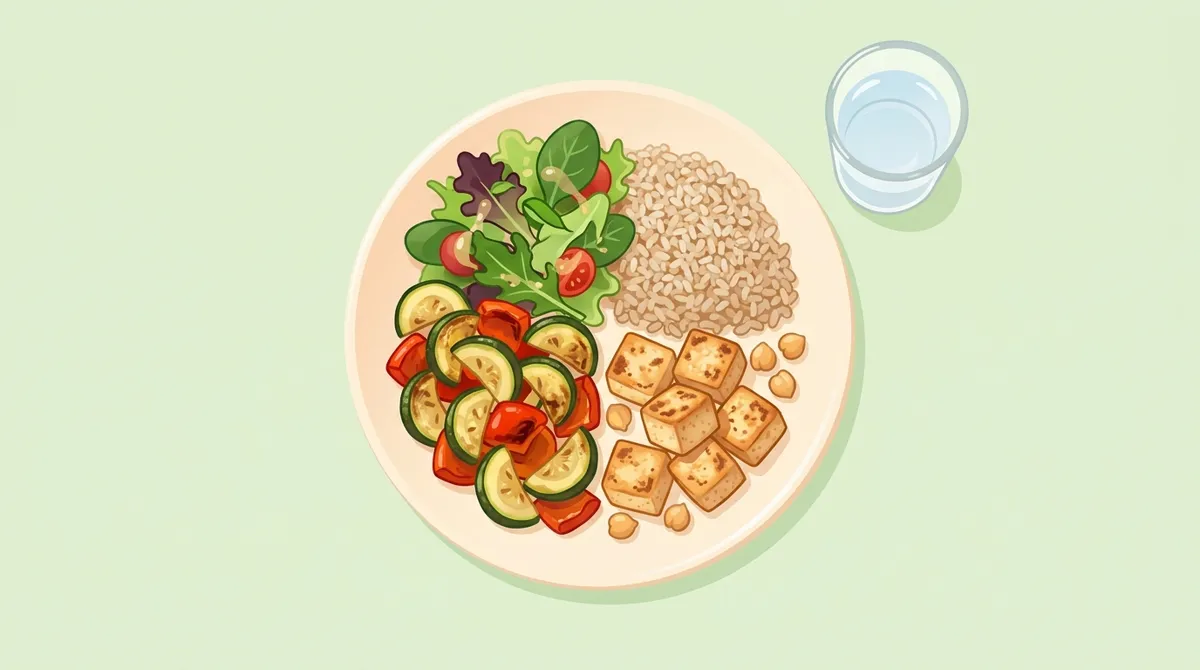
You don't need to weigh anything: just look at your plate. It works on low-effort nights too: a bowl of lentil and vegetable soup with a slice of whole grain bread follows the same proportions.
5 habits for a dinner that helps you lose weight
1Start with vegetables
Vegetables fill your plate with few calories. In one study, starting a meal with a large, light salad cut the calories eaten at that meal by 7–12%. A salad loaded with dressing and cheese, on the other hand, increased them2.
Try this: make a salad or a bowl of raw veggies while the rest of dinner cooks, and eat it first. Measure the dressing with a spoon instead of pouring freely.
2Add protein to every dinner
Protein keeps you full for longer and, while you're losing weight, helps you hold on to muscle3. It doesn't have to be steak: beans, eggs, tofu, Greek yogurt, cottage cheese or a piece of fish all work.
A handy trick is to keep canned beans or chickpeas in the pantry: they go into a salad, pasta or soup in a minute.
3Don't cut out carbs, choose the portion
Bread, pasta, rice and potatoes aren't off-limits at night. It's all about the amount: a portion that covers about a quarter of the plate, ideally whole grain, because it's more filling and carries you through to bedtime.
When dinner is only vegetables and protein, a lot of people end up looking for something sweet later on. A few carbs on the plate can help you skip the after-dinner snack.
4Watch the extras and the drinks
A lot of dinner calories aren't in the main dish but around it: oil, sauces, cheese, extra bread and drinks.
Alcohol in particular adds up faster than you'd think: a standard glass of wine can have up to 158 calories, some pints of stronger lager up to 222, and alcohol has 7 calories per gram, almost as many as fat4. If you drink with dinner, keep it for special occasions and have water alongside.
5Eat at regular times and don't skip it
Skipping dinner looks like a quick way to cut calories, but hunger usually just moves later: evening snacks or a much bigger breakfast. A complete dinner at a similar time every day makes everything more predictable.
Does eating late make you gain weight?
It's one of the most common questions. The short answer: what you eat over the whole day matters most, but timing can affect hunger.
- In a controlled study, the same people ate the same meals on an early schedule and then on a later one. When they ate late, they felt hungrier and their bodies burned slightly less energy during the day5.
- In another study, 30 people followed a diet with the same calories for 4 weeks, once with a big breakfast and once with a big dinner. They lost the same amount of weight, but felt less hungry during the day with the big breakfast6.
In practice: you don't need to eat at 5 pm, but a dinner that's not too big and not too late can make the next day easier. If you work late, eating late is fine: go for a lighter plate and shift more of your food to lunch.
7 healthy dinner ideas for weight loss
Here's a week of simple dinners, all built on the plate rule. Portions depend on your needs: to work out yours, read the guide on how many calories you should eat to lose weight.
| Day | Dinner | Why it works |
|---|---|---|
| Monday | Lentil and vegetable soup with a slice of whole grain bread | Fiber and protein in one bowl, very filling |
| Tuesday | Veggie omelet with mixed salad and roasted potatoes | Ready in 15 minutes, protein from eggs |
| Wednesday | Whole wheat pasta with chickpeas, cherry tomatoes and zucchini | A complete one-pot meal with beans instead of a heavy sauce |
| Thursday | Tofu and vegetable stir-fry with a small portion of rice | Lots of vegetables, quick to cook |
| Friday | Baked fish with potatoes and green beans | Lean protein, easy to control the oil |
| Saturday | Thin-crust pizza with a big salad first | Nothing is off-limits: the salad helps you not overdo it |
| Sunday | Vegetable soup with barley and a boiled egg or cottage cheese | Light but complete, great after a big lunch |
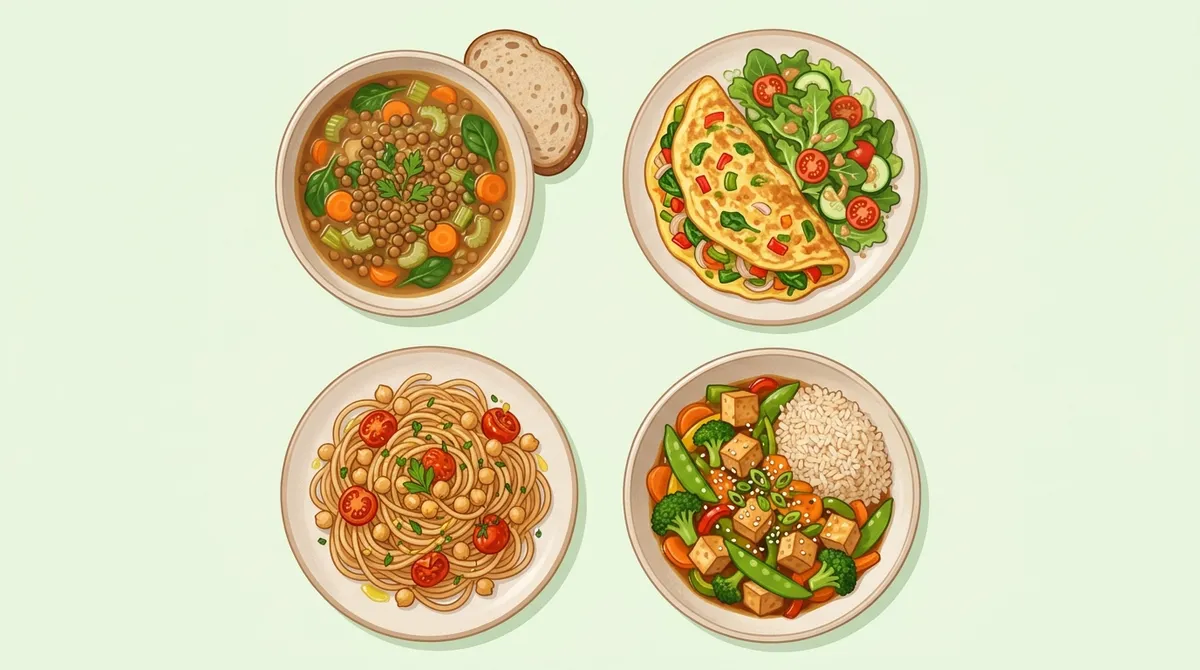
For more habits to go with your dinner, check out the guide on how to lose weight without dieting.
How to handle hunger after dinner
Evening snacking is often the weak spot of the day. In one study, eating closer to bedtime was linked to more eating occasions and more calories over the whole day7.
A few things that help:
- close the kitchen: do the dishes and tidy up, it's a signal that the meal is over;
- ask yourself if it's hunger or habit: often it's tiredness or boredom in front of the TV;
- if you're really hungry, keep it simple: a yogurt, a piece of fruit or herbal tea;
- keep snacks out of sight: what you see is what you eat.
Try this: for one week, when you feel like an after-dinner snack, wait 10 minutes and drink a glass of water. Then decide.
How to tell if your dinner is working
The same dinners can work for one person and not for another. The easiest way to find out is to track what you eat for a few weeks: research shows a consistent link between logging meals and weight loss8.
With eatamame, just snap a photo of your plate or describe it, even by voice: you'll see estimated calories and macros, a star rating and a comment from the bean. In a few seconds you'll know whether your dinner has enough protein or if the dressing got a bit out of hand. For tips on photographing your plates, read the guide on how to count calories from a photo.
Common dinner mistakes
- Having just a salad: without protein and some carbs, hunger comes back fast.
- Eating too little at lunch: a granola bar at your desk often means a much bigger dinner, or a long evening of snacking.
- Eating in front of the TV: you notice less of what you're eating, and it's easy to keep going after you're no longer hungry.
- Forgetting what you drink: wine, beer and soda add up without filling you.
- Chasing the perfect dinner and ignoring the rest: a good dinner helps, but results depend on the whole day.
Frequently asked questions
Will skipping dinner help me lose weight?
+
Usually not. You cut one meal, but hunger comes back later that night or the next day, often with less filling snacks. A light but complete dinner is easier to stick with.
What time should I stop eating at night?
+
There's no magic cut-off time. Studies suggest that eating very late can make you hungrier, so aim for a regular dinner time and avoid going to bed straight after a big meal.
Is it bad to eat carbs at dinner?
+
No. A normal portion of pasta, rice or potatoes, ideally whole grain and with vegetables or beans, is fine at dinner. What matters is the portion and your total for the day.
Can I have pizza or takeout and still lose weight?
+
Yes, now and then. Start with a salad or a vegetable side, pick one main and skip the extras like garlic bread or a second helping.
How many calories should dinner be?
+
There's no number that works for everyone: it depends on your daily calorie needs and how you split your meals. Work out your total first, then divide it in the way that suits you.
Sources
- Harvard T.H. Chan School of Public Health – Healthy Eating Plate
- Rolls BJ et al. – Salad and satiety: energy density and portion size of a first-course salad affect energy intake at lunch, Journal of the American Dietetic Association (2004)
- Leidy HJ et al. – The role of protein in weight loss and maintenance, American Journal of Clinical Nutrition (2015)
- NHS – Calories in alcohol
- Vujović N et al. – Late isocaloric eating increases hunger, decreases energy expenditure, and modifies metabolic pathways in adults with overweight and obesity, Cell Metabolism (2022)
- Ruddick-Collins LC et al. – Timing of daily calorie loading affects appetite and hunger responses without changes in energy metabolism in healthy subjects with obesity, Cell Metabolism (2022)
- Reid KJ et al. – Meal timing influences daily caloric intake in healthy adults, Nutrition Research (2014)
- Burke LE et al. – Self-monitoring in weight loss: a systematic review, Journal of the American Dietetic Association (2011)
This guide is for information only and does not replace advice from a doctor or nutritionist. If you have a health condition, are pregnant or have specific needs, talk to a professional.