Team eatamame

To lose weight without dieting, focus on a few habits you can keep: balanced plates, more vegetables, protein and fiber, water instead of sugary drinks, fewer ultra-processed foods, enough sleep and more movement every day. Small, steady changes create a gentle calorie deficit, with no extreme restrictions and no yo-yo effect.
Why strict diets rarely last
Very restrictive diets can work for a few weeks, but they're hard to stick with: hunger, tiredness and cravings take over, and the weight often comes back, sometimes with interest.
What makes the difference over time isn't the perfect diet, but a way of eating you can keep up every day. That's why the World Health Organization focuses on simple, everyday food choices rather than strict rules1.
So it pays to work on habits: one at a time, until they become automatic.
10 habits to lose weight without dieting
1Build a balanced plate
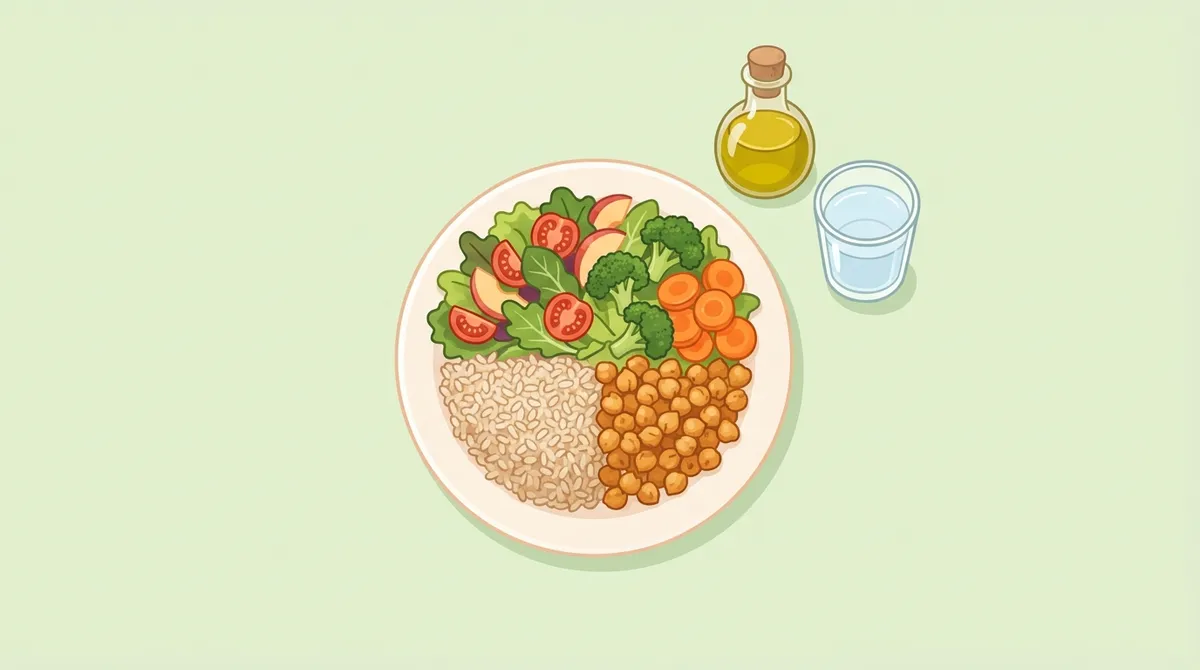
A simple method is the "healthy plate": half vegetables and fruit, a quarter whole grains and a quarter protein, with healthy plant oils such as olive oil in moderation2. No weighing needed: just look at your plate before you start.
2Add protein to every meal
Protein keeps you full for longer and helps preserve muscle while you lose weight3. Beans and lentils, Greek yogurt, eggs, fish and chicken are easy options, even at breakfast.
3Fill up on vegetables and fiber
Vegetables, legumes, fruit and whole grains fill you up more for fewer calories. Yet many people don't eat enough of them1.
Try this: start lunch and dinner with a portion of vegetables, raw or cooked. It's one of the simplest changes and the one you'll notice most.
4Drink water instead of sugary drinks
Soda, juice and sweetened iced tea add lots of calories without filling you up, and they're linked to weight gain4. Swapping them for water, sparkling or with a squeeze of lemon, is one of the easiest ways to cut calories without noticing. The same goes for alcohol.
5Cut back on ultra-processed foods
Packaged snacks, store-bought sweets and ready meals are easy to overeat. In a controlled study, people on an ultra-processed diet ate about 500 more calories a day than on a minimally processed diet, with the same food on offer5.
You don't have to cut them out completely: just don't make them the base of your day.
6Eat more slowly
Eating fast gives your body less time to register that you've had enough. In a study of nearly 60,000 people with type 2 diabetes, slower eaters were less likely to have obesity than fast eaters6. Put your fork down between bites and eat away from screens.
7Plan your meals and snacks
Skipping meals often means getting to the next one too hungry and choosing on impulse. Regular mealtimes and a few ready-made snacks, like fruit, yogurt or a handful of nuts, help you avoid sudden hunger.
Try this: prepare tomorrow's snack the night before. When it's ready to go, it's much easier to choose it.
8Get enough sleep
Too little sleep increases hunger and cravings for high-calorie foods7. Adults are advised to get 7 or more hours a night8: a regular schedule and less screen time before bed help.
9Move more during the day
You don't need to start with the gym: every bit of movement counts. Walking, taking the stairs and getting off the bus one stop early all add up over the week. The WHO recommends at least 150–300 minutes a week of moderate activity for adults9.
10Keep track of what you eat
Logging your meals helps you spot habits you don't notice, like snacking between meals or portions that keep growing. Research shows a consistent link between tracking food and weight loss10. And you don't have to count everything by hand: a photo of your plate is enough.
Where to start: a 4-week plan
Changing everything at once is the fastest way to give up. Add one habit a week and keep the ones you already have:
| Week | Habit to add | Example |
|---|---|---|
| 1 | Water instead of sugary drinks | A water bottle always on your desk |
| 2 | Vegetables first | A salad or soup before your main course |
| 3 | Protein at every meal | Greek yogurt at breakfast, beans at lunch |
| 4 | More movement every day | A 20-minute walk after lunch or dinner |
After a month you'll have four new habits, without ever going on a diet.
What a day without dieting can look like
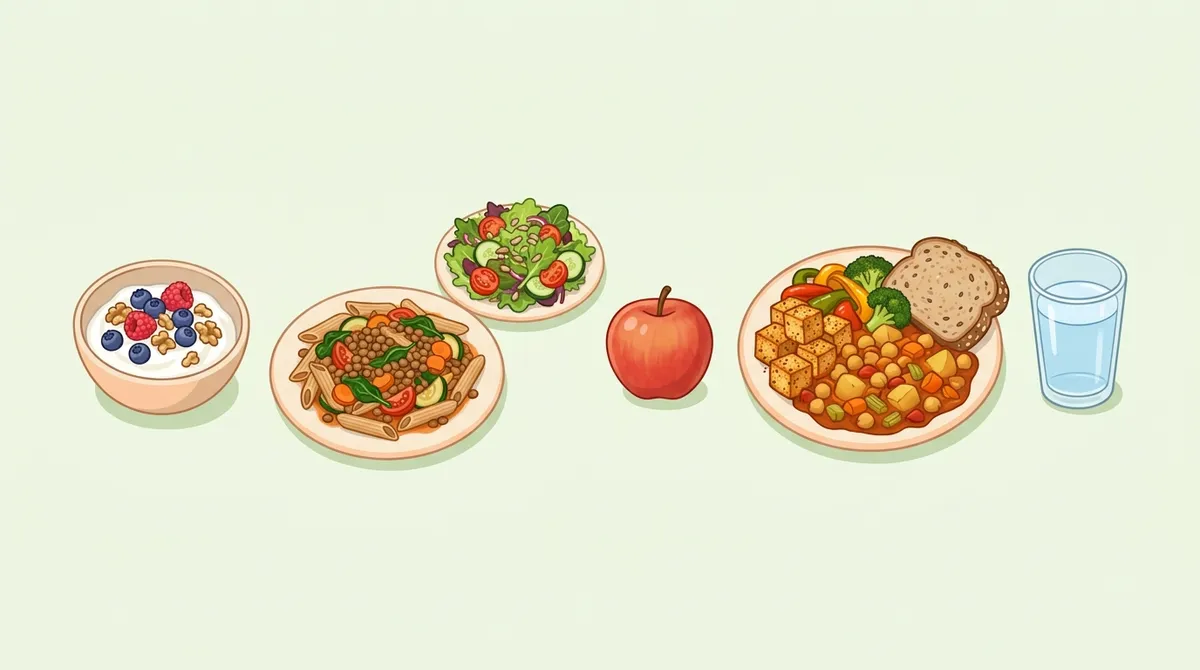
Here's how these habits can fit together in a normal day. It's not a meal plan to follow to the letter: it's an example to adapt to your tastes and schedule.
| Time | Example | Habits used |
|---|---|---|
| Breakfast | Greek yogurt with fresh fruit and a handful of walnuts | Protein, fiber |
| Lunch | Mixed salad, then whole-grain pasta with beans and vegetables | Vegetables first, balanced plate |
| Snack | An apple or a banana packed the night before | Planned snacks |
| Dinner | Tofu or beans with roasted vegetables and whole-grain bread | Balanced plate, protein |
| During the day | Water instead of soda and a 20-minute walk | Water, movement |
Eat slowly, away from screens, and snap a photo of your meals to keep track: after a few days you'll quickly see what works and what doesn't.
How much weight can you lose safely?
A realistic pace is about 1–2 pounds (0.5–1 kg) a week: people who lose weight gradually are more likely to keep it off11. Losing weight faster usually means restrictions that are hard to maintain.
With the right habits, results come more slowly, but they stick.
Common mistakes to avoid
- Trying to change everything at once: motivation drops after a few days and old habits come back.
- Skipping meals to "save" calories: it often leads to eating more later.
- Banning entire food groups: it makes everything harder to maintain, with no real benefit.
- Only watching the scale: your weight goes up and down from day to day. What matters is the trend over a few weeks.
Frequently asked questions
Can you really lose weight without dieting?
+
Yes. To lose weight you need to take in a little less energy than you use, but you don't need a strict diet to get there. The habits in this guide cut calories naturally, without counting every gram or banning foods.
Which habit should I start with?
+
The one that feels easiest. For many people it's swapping sugary drinks for water or starting meals with a portion of vegetables: small changes with a visible effect.
Do I have to cut out carbs or sweets?
+
No. Bread, pasta and rice can stay, ideally whole grain and in sensible portions. Sweets aren't off-limits either: what matters is how often you have them, not a single treat.
How soon will I see results?
+
Often within the first few weeks, but every body is different. A pace of 1–2 pounds (0.5–1 kg) a week is considered realistic and easier to maintain.
Do I need to exercise to lose weight?
+
It helps, but you don't have to start with the gym. Walking more, taking the stairs and moving throughout the day already counts. Food remains the most important lever.
Sources
- World Health Organization – Healthy diet
- Harvard T.H. Chan School of Public Health – Healthy Eating Plate
- Leidy HJ et al. – The role of protein in weight loss and maintenance, American Journal of Clinical Nutrition (2015)
- Harvard T.H. Chan School of Public Health – Sugary drinks
- Hall KD et al. – Ultra-processed diets cause excess calorie intake and weight gain, Cell Metabolism (2019)
- Hurst Y, Fukuda H – Effects of changes in eating speed on obesity in patients with diabetes, BMJ Open (2018)
- Spiegel K et al. – Sleep curtailment is associated with increased hunger and appetite, Annals of Internal Medicine (2004)
- CDC – About sleep
- World Health Organization – Physical activity
- Burke LE et al. – Self-monitoring in weight loss: a systematic review, Journal of the American Dietetic Association (2011)
- CDC – Losing weight
This guide is for information only and does not replace advice from a doctor or nutritionist. If you have a health condition, are pregnant or have specific needs, talk to a professional.