Team eatamame

Emotional eating is the urge to eat that comes from stress, boredom, tiredness or sadness, not from what your body needs: it hits suddenly and asks for specific foods, often sweet or salty. To stop it, pause for a few minutes and ask what kind of hunger it is, pick an alternative that fits the feeling and don't skip meals: very strict diets make it stronger.
What is emotional eating?
Emotional eating is the urge to eat that shows up when your body doesn't need food, but your mind is looking for comfort: after a stressful day, out of boredom, tiredness or sadness. Researchers define it as a tendency to eat in response to negative emotions, mostly choosing high-calorie, very tasty foods1.
Most people do it now and then, and that's not harmful2. The trouble starts when it becomes your main way of handling emotions: studies that follow adults over time show that people who tend to eat in response to emotions are more likely to gain weight1.
The good news: you don't need endless willpower. You need to recognize it and have a few alternatives ready.
Physical hunger vs emotional hunger
The first step is figuring out which kind of hunger you're feeling. These are the most useful signs2:
| Physical hunger | Emotional hunger | |
|---|---|---|
| How it starts | Builds slowly, little by little | Suddenly, and feels urgent |
| What it wants | Almost any food will do | One specific food: chocolate, chips, ice cream |
| When you stop | When you feel satisfied | Often past the point of fullness |
| Afterwards | Satisfaction | Often guilt |
If you mostly recognize yourself in the right-hand column, it's probably not your stomach asking for food.
Why it happens
Stress changes your appetite
When stress lasts a long time, your body makes more cortisol, a hormone that increases appetite and the drive to eat. Stress also pushes you toward foods high in fat and sugar, which seem to calm you down for a moment3.
In a lab study of 59 women, those with a bigger cortisol response to stress ate more calories on the stressful day and more sweet foods than the others4.
Strict diets feed it
It sounds backwards, but restricting too much is one of the factors most closely linked to emotional eating25. Research on restrictive dieting has found more preoccupation with food, stronger emotional reactions and more binges once food is available again6.
That's why people who struggle with emotional eating often benefit more from learning to handle emotions than from an even stricter diet5.
Sleep, boredom and habit
- Short sleep: in a small study of 12 healthy young men, two days of restricted sleep increased hunger and appetite, especially for calorie-dense foods7. Short sleep combined with emotional eating appears to be particularly linked to weight gain1.
- Boredom: eating fills time and gives you something to do2.
- Habit: if the couch at night has gone with snacks for years, the couch alone is enough to trigger a craving.
How to stop emotional eating in 7 steps
1Pause and ask what kind of hunger it is
When the urge hits, you don't have to win a battle: you just need to buy some time. Wait a few minutes, say 10, and ask yourself whether you're eating because you're hungry or because of something you're feeling2. Often you'll notice it's boredom or anxiety, and the urge fades.
Try this: before you open the fridge, ask yourself: "Am I hungry, sleepy, stressed or bored?" If the answer isn't "hungry", pick one of the alternatives in step 3.
2Name the feeling
"I'm anxious about tomorrow", "today was rough" or "I'm bored" are simple sentences, but they make a real difference. Emotional eating often comes from mixing up emotions with hunger signals15. Naming what you feel helps you see what you actually need.
3Pick an alternative that fits the feeling
Food calms you for a few minutes, but the feeling stays. A response designed for that emotion works better. Exercise, relaxation and time with people you care about are among the strategies that help reduce stress3:
| If you feel… | Try… |
|---|---|
| Stressed or anxious | A 10-minute walk, slow breathing, some stretching |
| Bored | Moving to another room, calling someone, doing something with your hands |
| Tired | Going to bed earlier, a warm shower, a cup of herbal tea |
| Sad or lonely | Texting a friend, listening to music, getting some fresh air |
| Angry | Moving hard for a few minutes, writing down what you're thinking |

4Eat regular meals and don't skip any
Getting to the evening after skipping lunch means real hunger and emotional hunger at the same time: the hardest mix to handle. Three proper meals with protein, vegetables and grains, plus a snack when you need one, take the edge off sudden cravings: not letting yourself get too hungry is one of the simplest tips2. For filling meal ideas, see the guide to a healthy dinner for weight loss.
5Don't ban the foods you love
Banning chocolate makes it more tempting, and when stress hits you end up eating the whole bar. It works better to give it a place: one portion, on a plate, slowly and without screens, actually enjoying it.
Eating mindfully, meaning slowly and paying attention to taste and fullness, is one of the most studied strategies: in a review of 14 studies, mindfulness interventions reduced emotional eating and binge eating, while the effect on weight was less clear8.
6Sleep and move more
These are indirect but effective ways to lower background stress. Exercise blunts some of the negative effects of stress3, and getting enough sleep keeps the next day's hunger in check7. You don't need a gym: a walk after dinner already counts.
7Keep a food and mood diary
For a few weeks, write down what you eat, when, and how you feel. After a few days, patterns show up: always on Tuesday nights, always after a difficult call, always in front of the TV. Keeping track of what you eat is also one of the habits most closely linked to weight loss9.
With eatamame, a photo or a description of your meal, even by voice, is enough to see estimated calories and macros and a comment from the bean. Your streak helps you stay consistent, and having your meals logged makes it easier to notice when emotional eating shows up. If you want to start, here's how to count calories from a photo.
If it already happened: what to do next
It happens to everyone. What you do next matters more than the episode itself:
- No punishment: skipping the next meal or "making up for it" with a day of fasting restarts the cycle.
- Go back to your next normal meal, as if nothing happened.
- Ask what happened before: what you were feeling, what time it was, where you were. That's useful information, not a reason for guilt.
- Look at the week, not the evening: one episode doesn't change your results, a habit does. For an approach without drastic rules, read how to lose weight without dieting.
When to get help
Occasional emotional eating isn't an illness. But some signs deserve attention, because they can point to binge eating disorder10:
- eating a lot of food in a short time and not being able to stop, even when full;
- eating very fast, alone or in secret;
- feeling depressed, guilty, ashamed or disgusted afterwards;
- if it happens regularly.
If this sounds familiar, the NHS advises seeing a GP as soon as you can: they can refer you to a specialist team. In the UK you can also talk in confidence to the eating disorder charity Beat10. Outside the UK, start with your family doctor. Getting help early makes recovery easier.
Common mistakes
- Relying on willpower alone: changing your surroundings works better, for example not keeping snacks in sight.
- Responding with a stricter diet: restriction is one of the drivers of emotional eating6.
- Skipping meals to "make up for it": it leads to more hunger in the evening.
- Eating in front of screens: you don't notice how much you eat or when you're satisfied.
- Judging yourself for one episode: guilt is often what sets off the next one.
Frequently asked questions
Does emotional eating cause weight gain?
+
It can, if it becomes a habit: the foods people reach for are usually high in calories, and studies that follow adults over time link a tendency to eat in response to emotions with later weight gain. A single episode doesn't matter: how often it happens does.
Why is emotional eating worse at night?
+
In the evening, tiredness, built-up stress and free time in front of a screen all add up. If you ate too little during the day, real hunger mixes with emotional hunger. Regular meals and a proper dinner help a lot.
Is emotional eating an eating disorder?
+
Not on its own: it's a very common behavior. It becomes a sign worth taking seriously if you eat large amounts and can't stop, often in secret and with strong shame afterwards. In that case, talk to your doctor.
What should I eat when I'm stress eating?
+
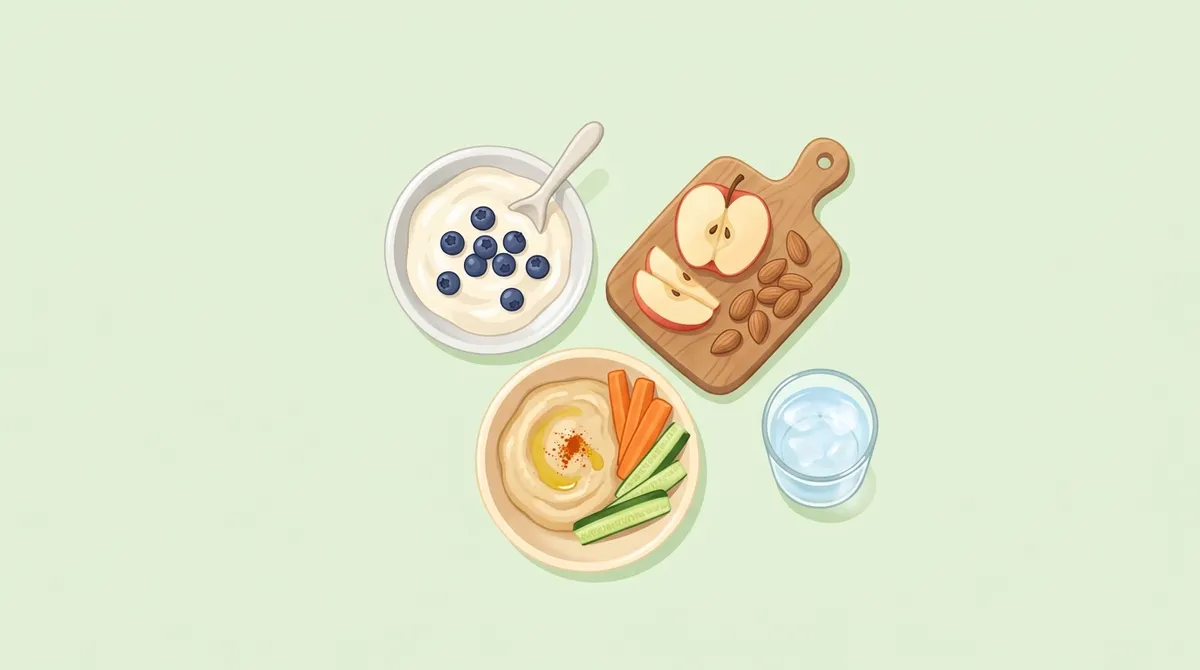
If the pause shows you're also physically hungry, pick a filling snack like yogurt with fruit or veggies with hummus. If you really want that treat, put a portion on a plate and eat it slowly, without screens.
Can emotional eating go away completely?
+
Eating for comfort now and then is normal and not harmful. It becomes a problem when it's your first or only way of dealing with stress. A realistic goal is to have other strategies too, so episodes become rarer and smaller.
Sources
- Konttinen H – Emotional eating and obesity in adults: the role of depression, sleep and genes, Proceedings of the Nutrition Society (2020)
- Cleveland Clinic – Emotional Eating: What It Is and Tips to Manage It
- Harvard Health Publishing – Why stress causes people to overeat
- Epel E et al. – Stress may add bite to appetite in women: a laboratory study of stress-induced cortisol and eating behavior, Psychoneuroendocrinology (2001)
- van Strien T – Causes of emotional eating and matched treatment of obesity, Current Diabetes Reports (2018)
- Polivy J – Psychological consequences of food restriction, Journal of the American Dietetic Association (1996)
- Spiegel K et al. – Sleep curtailment is associated with increased hunger and appetite, Annals of Internal Medicine (2004)
- Katterman SN et al. – Mindfulness meditation as an intervention for binge eating, emotional eating, and weight loss: a systematic review, Eating Behaviors (2014)
- Burke LE et al. – Self-monitoring in weight loss: a systematic review, Journal of the American Dietetic Association (2011)
- NHS – Binge eating disorder: overview
This guide is for information only and does not replace advice from a doctor or nutritionist. If you have a health condition, are pregnant or have specific needs, talk to a professional.